(888) 450-0858
24/7 Emergency Service
24/7 Emergency Service
Our IICRC-certified restoration process follows ANSI/IICRC S500 standards through four distinct phases, taking your Marietta property from emergency stabilization to full reconstruction. Every step is documented, monitored, and verified.
60-Minute Emergency Response Available
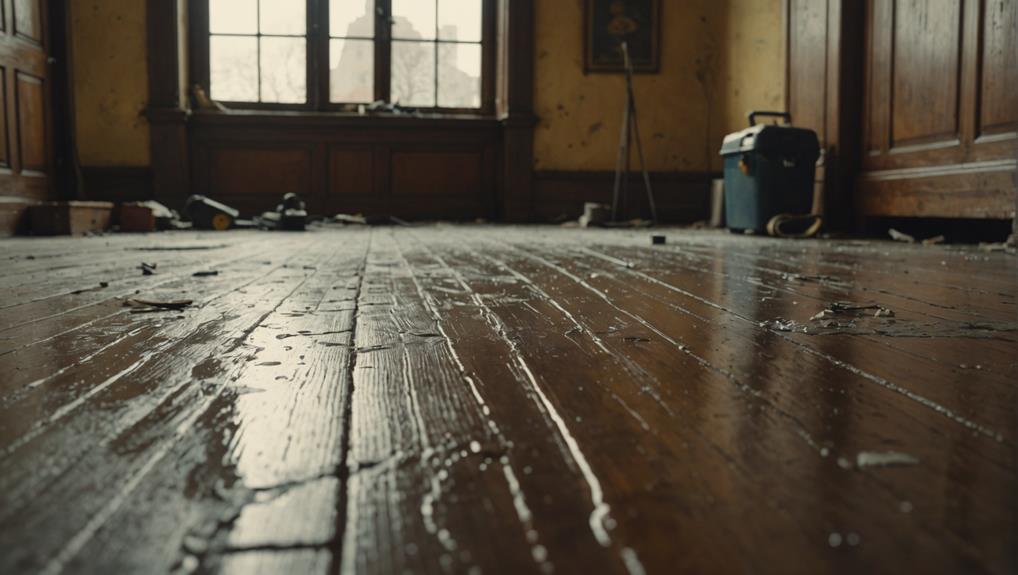
Understanding the water damage restoration process before an emergency strikes gives Marietta homeowners a significant advantage. When water invades your property from a burst pipe, appliance failure, or storm flooding, knowing what happens next reduces anxiety and helps you make informed decisions about your property.
Professional restoration follows a predictable, science-based sequence refined over decades of industry practice. The ANSI/IICRC S500 Standard provides the framework our Marietta-based crews follow without exception, governing everything from contamination classification to final moisture verification.
The four phases below represent the typical progression from emergency call to completed restoration. Our goal is to return your Marietta home to its pre-loss condition efficiently while maintaining thorough documentation for insurance claim purposes.
The first phase begins the moment you call (888) 450-0858. Our dispatch team gathers critical information while a restoration crew mobilizes from our nearest staging location. Crews arrive at Marietta properties within 60 minutes, equipped with extraction units, moisture detection instruments, and personal protective equipment.
Before restoration work begins, our lead technician conducts a comprehensive safety assessment that prioritizes occupant safety. The evaluation examines electrical panels for water contact, since energized circuits in standing water create life-threatening electrocution hazards demanding immediate power isolation.
Structural integrity evaluation checks load-bearing walls, floor joists, and ceiling assemblies for saturation that could compromise weight-bearing capacity. Moisture meters quantify saturation levels, identifying areas requiring shoring or restricted access until drying completes.
The assessment also evaluates air quality, particularly in Category 2 and 3 events where biological contaminants produce hazardous airborne particles. When conditions compromise habitability, our team provides relocation guidance for Marietta families.
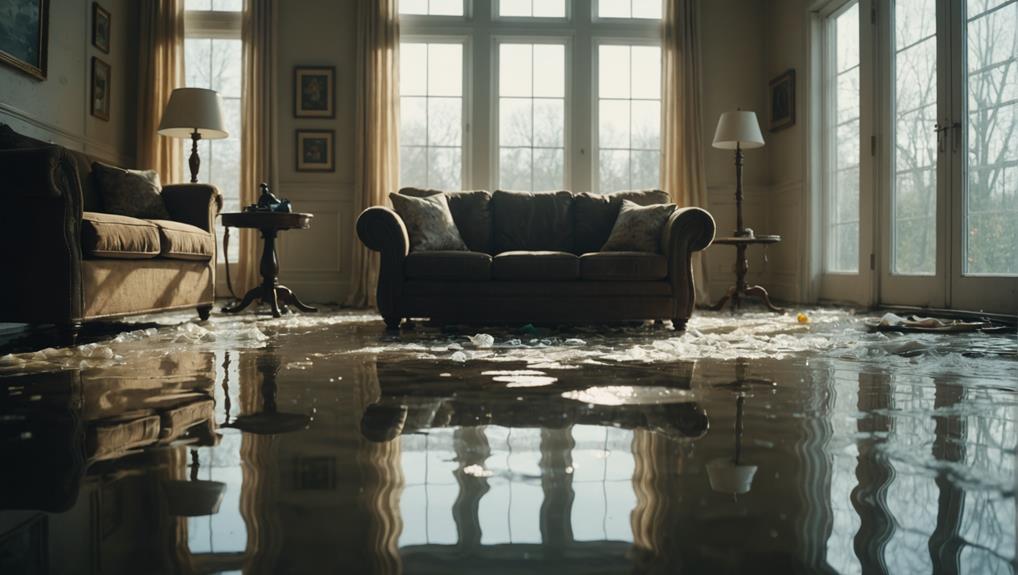
Stopping the water at its source is the single most impactful action during emergency response. Our technicians trace water migration patterns back to the origination point using visual inspection, thermal imaging, and moisture mapping techniques. Common sources in Marietta homes include supply line failures behind walls, water heater ruptures, washing machine hose bursts, and roof penetration points allowing storm water into attic spaces.
Once identified, the technician takes immediate action to stop active water intrusion by shutting off fixture supply valves, closing the main water supply at the meter, or implementing temporary weatherproofing for roof-related intrusion. Source identification also informs the contamination classification that determines all subsequent restoration protocols, since a clean supply line break requires fundamentally different handling than a sewage backup.
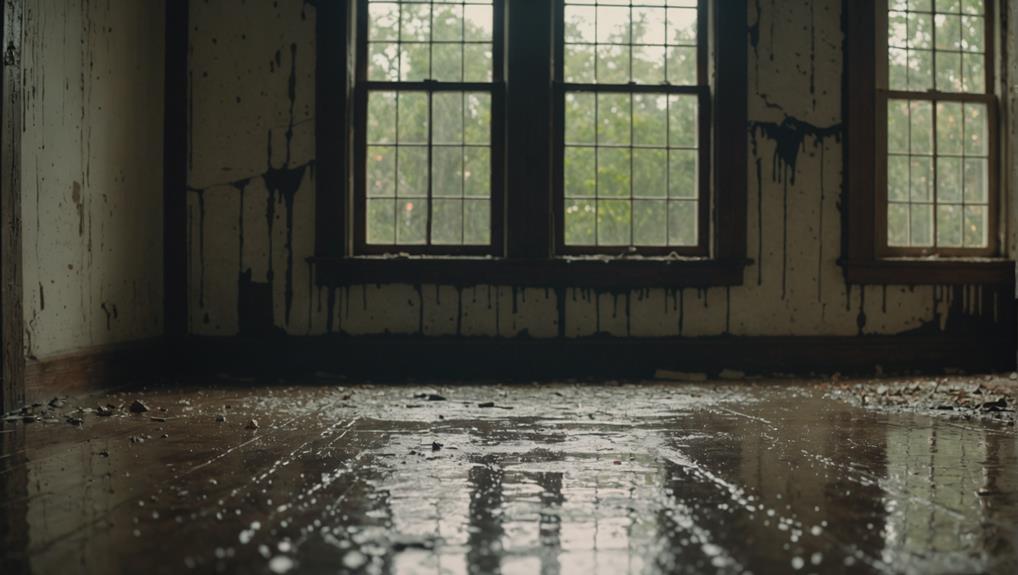
The IICRC S500 standard establishes three contamination categories that dictate every subsequent restoration decision. Accurate classification prevents under-treatment that leaves hazardous contaminants, or over-treatment that inflates restoration costs.
Category 1 (Clean Water) originates from sanitary sources like broken supply lines or rainwater intrusion, requiring standard extraction and drying. Category 2 (Gray Water) contains contaminants from appliance overflows or sump pump failures, requiring antimicrobial application and potential removal of porous materials.
Category 3 (Black Water) presents the highest health risk from sewage backups or prolonged standing water. Black water protocols mandate full protective equipment, containment barriers, removal of all affected porous materials, and antimicrobial treatment before reconstruction. Technicians also classify the damage class (1 through 4) based on absorption rates, guiding equipment selection for drying.
With safety confirmed and the water source controlled, extraction begins immediately. Every hour that water remains in contact with building materials increases restoration costs. Our extraction phase targets 95% removal of free-standing water within 24 hours, with remaining bound moisture addressed during Phase 3.
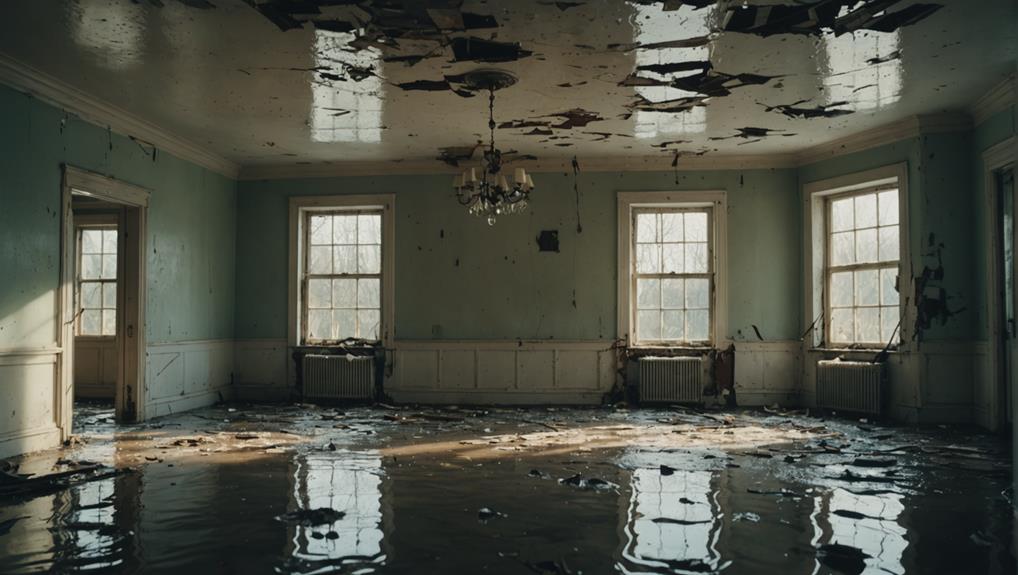
Our primary extraction capability comes from truck-mounted extraction systems that remain in the vehicle while connected to hoses routed into the structure. These units process thousands of gallons per hour through high-capacity vacuum pumps, routing extracted water directly to the truck's holding tank for proper disposal.
Truck-mounted systems are particularly effective when significant flooding leaves inches or feet of standing water across multiple rooms. A flooded basement can be substantially cleared within hours, drastically reducing secondary damage to hardwood floors, cabinetry, and wall assemblies.
Technicians position extraction wands strategically, working from the perimeter toward drains. Weighted tools press into carpet and pad materials, pulling trapped water from fibers. For hardwood and tile floors, flat-profile extractors maintain maximum suction contact while preventing surface damage.
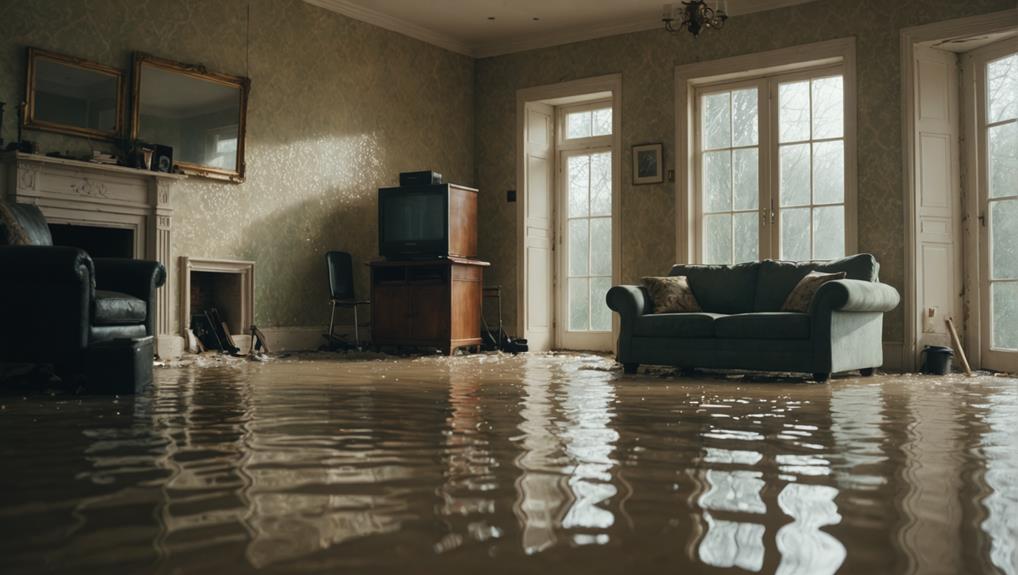
Many Marietta homes feature crawl space foundations, multi-level construction, and compartmentalized layouts that truck-mounted hoses cannot practically reach. Portable extraction units provide professional-grade suction in compact packages that technicians carry to wherever water has traveled.
Crawl space extraction presents unique challenges because these confined areas trap moisture against floor joists and subflooring where it accelerates wood rot and mold colonization. Our technicians use specialized low-profile extractors designed for limited vertical clearance, removing standing water and saturated insulation that act as moisture reservoirs.
Portable units also serve critical roles in upper-floor extraction where water migrates through floor assemblies into rooms below. Our crews deploy enough portable units to address all affected levels in parallel, compressing the extraction timeline and limiting total material exposure to standing water.
Why Speed Matters: Drywall wicks moisture upward at approximately one inch per hour. Hardwood flooring begins cupping within 24 hours. After 48 hours, mold spores activate on organic materials. Our 24-hour extraction target beats these thresholds to maximize salvageable material.
After extraction removes standing water, substantial moisture remains trapped within structural materials including wall cavities, subflooring, insulation, and framing lumber. Phase 3 uses controlled environmental manipulation to draw this bound moisture out of materials, typically requiring 3 to 5 days of continuous equipment operation with daily monitoring.
Effective structural drying relies on psychrometric principles that govern relationships between air temperature, humidity, and moisture evaporation rates. Our IICRC-certified technicians calculate specific humidity, dew point, and vapor pressure differentials to determine optimal equipment configurations for each drying environment.
Commercial LGR (Low Grain Refrigerant) dehumidifiers form the backbone of our drying strategy, pulling moisture from the air by cooling it below the dew point. Each unit removes 15 to 20 gallons of moisture per day. High-velocity air movers work in conjunction by creating targeted airflow across wet surfaces, disrupting the saturated boundary layer and replacing it with drier air. For wall cavities, injectidry systems push dry air directly into enclosed spaces through small access ports, drying framing and insulation without requiring drywall removal.
Equipment placement is calculated using psychrometric charts that determine exactly how many dehumidifiers and air movers each room requires. Insufficient equipment extends drying time and increases overall costs, while excessive equipment wastes energy.
Daily moisture monitoring serves two essential purposes: verifying that the drying plan produces expected results, and generating documentation that insurance companies require to approve claims. Our technicians visit the property every 24 hours to take comprehensive readings at all established monitoring points.
We use pin-type moisture meters to quantify moisture content as a percentage. Dimensional lumber should read below 15%, while drywall targets vary by layer. Pinless meters scan larger areas without surface penetration, identifying hidden moisture pockets.
Thermo-hygrometers monitor ambient temperature, humidity, and dew point to verify equipment is achieving target grain depression. All readings are recorded on standardized drying logs that track trends over time and accompany your insurance claim.
Once moisture readings confirm all structural materials have returned to acceptable dry standards, the final restoration phase begins. The timeline ranges from a few days for minor repairs to three weeks for extensive reconstruction involving multiple rooms.
Porous materials that absorbed Category 2 or Category 3 contaminated water must be removed and disposed of properly, regardless of whether they appear visually dry. This includes affected carpet padding, fiberglass insulation, particleboard subflooring, and drywall that wicked contaminated water beyond a salvageable height.
Our crews establish negative air pressure zones using HEPA-filtered air scrubbers, then remove damaged materials in manageable sections for transport. Demolition proceeds carefully to preserve adjacent materials that passed moisture verification.
Cobb County disposal regulations govern how water-damaged construction materials are handled and deposited at approved facilities. Category 3 contaminated materials require classification as potentially biohazardous waste with specific handling protocols. Our crews maintain current knowledge of Cobb County requirements and coordinate with approved facilities on every Marietta project.
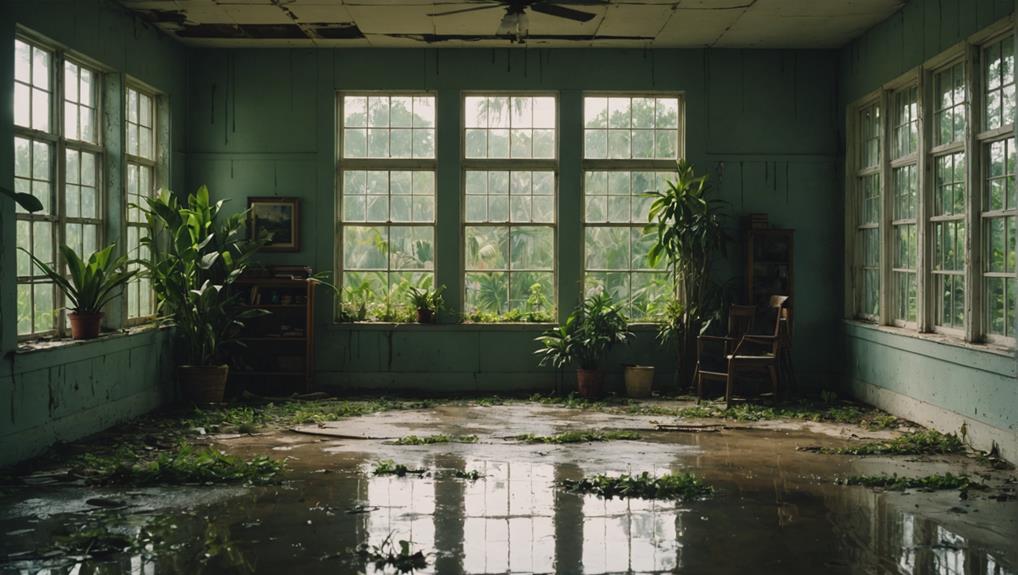
The reconstruction phase restores your Marietta property to its exact pre-loss condition, matching original materials, finishes, and construction methods wherever possible. Our crews include carpenters, drywall finishers, painters, flooring installers, and trim specialists working as a coordinated team.
Drywall replacement includes moisture-resistant backing in areas prone to future water exposure. New drywall is fitted, taped, and finished through multiple mud coats to achieve a seamless match. Paint matching uses spectrophotometer technology to identify exact color formulations. Flooring reconstruction sources matching species, grade, and width from specialty suppliers, with new sections woven into existing floors at natural transition points.
Throughout reconstruction, we coordinate with your insurance adjuster to ensure all approved scope items are completed to specification. Any additional damage discovered, such as hidden mold behind removed drywall, is documented and submitted as a supplemental claim before repair proceeds.
Documentation is a parallel workflow running alongside every technical activity from the moment our crew arrives. This evidence protects your financial interests by giving your insurance company what it needs to process and approve your claim efficiently.
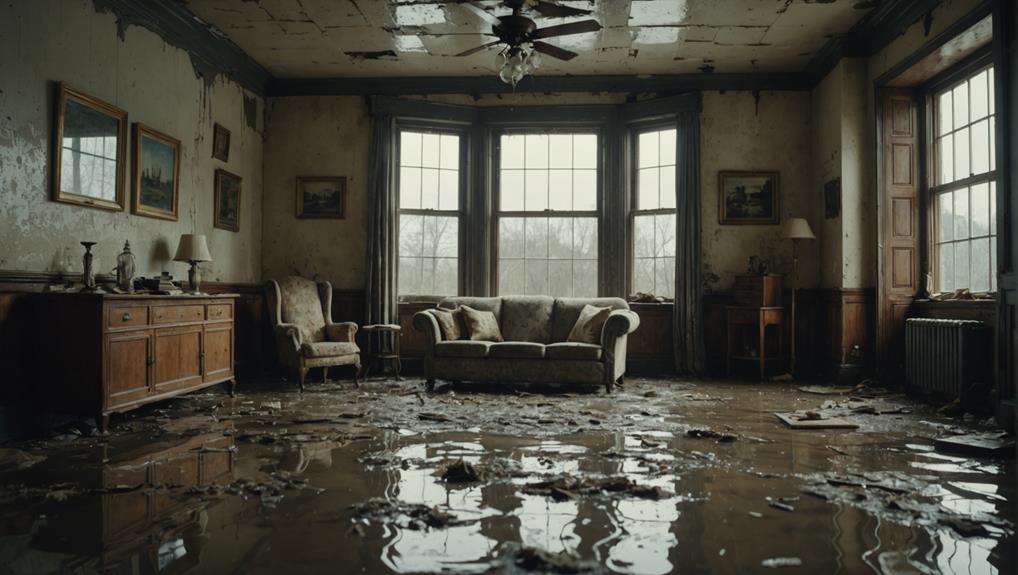
Our documentation protocol captures timestamped photographic evidence at every stage. Initial arrival photographs record the as-found condition before any work begins, including wide-angle views of each affected room and close-up images of specific damage points.
As work progresses, technicians photograph each milestone: extraction equipment deployment, moisture readings, material removal exposing hidden damage, antimicrobial treatment, and completed reconstruction. Every photograph includes embedded metadata with date, time, and GPS coordinates verifying when and where it was captured.
This visual record creates an unbroken chain of documentation for your insurance claim, showing exactly what damage existed, what work was performed, and the final result.
Moisture mapping translates technical measurements into clear visual documentation that insurance adjusters can quickly evaluate. Our technicians create scaled floor plans with moisture readings overlaid at grid points, producing color-coded maps showing exactly where moisture was detected and at what levels.
Initial maps establish the damage footprint and justify the scope of work. Daily updates during drying show moisture declining toward acceptable standards, demonstrating that equipment rental duration is justified. Final maps confirm all areas have returned to pre-loss moisture levels, providing the basis for reconstruction authorization.
We generate all estimates using Xactimate software, the industry-standard platform used by most insurance carriers and independent adjusters. Using the same estimating tool eliminates compatibility issues and ensures line items align with what your adjuster expects. Our project managers review every estimate for accuracy before submission.
The complete restoration process typically takes 1 to 3 weeks depending on damage severity. Emergency response and water extraction complete within the first 24 hours. Structural drying requires 3 to 5 days with daily moisture monitoring. Final reconstruction timelines depend on the scope of material replacement needed, with minor repairs finishing in days and major reconstruction extending to 2-3 weeks.
The IICRC S500 standard classifies water damage into three categories. Category 1 involves clean water from supply lines or rainwater. Category 2 is gray water containing chemical or biological contaminants from appliances or sump pump failures. Category 3 is black water from sewage backups or flooding that contains dangerous pathogens. Each category requires progressively more intensive restoration protocols, protective equipment, and antimicrobial treatments.
Whether you need to leave depends on damage extent and contamination category. Category 1 damage affecting a single room usually allows continued occupancy. Category 2 or 3 contamination, structural compromise, or electrical hazards typically require temporary relocation. Our technicians assess habitability during the initial safety evaluation and provide clear guidance specific to your situation.
Professional structural drying employs commercial-grade LGR dehumidifiers that remove 15-20 gallons of moisture daily, high-velocity air movers that create targeted airflow across wet surfaces, and specialty equipment like injectidry systems for drying wall cavities without removal. Technicians use pin-type and pinless moisture meters, thermo-hygrometers, and thermal imaging cameras to monitor progress and guide equipment placement.
Yes. Our documentation follows insurance industry standards with timestamped photo evidence at every phase, detailed moisture mapping readings, itemized scope-of-work reports, and material inventories. We use Xactimate estimating software, which is the same platform most insurance adjusters use. Our project managers communicate directly with your adjuster to ensure claims processing moves efficiently.
If mold is discovered during restoration, we establish containment barriers with negative air pressure to prevent spore migration to unaffected areas. The affected materials are removed following IICRC S520 remediation standards. We apply antimicrobial treatments to remaining structural components and conduct clearance testing before proceeding with reconstruction. Mold remediation may extend the overall timeline by 3 to 5 additional days.
Our certified technicians follow this proven 4-phase process on every project. Call now for 60-minute emergency response and a detailed assessment of your property's restoration needs.
Call Now: (888) 450-085824/7 Emergency Response | IICRC Certified | Insurance Coordination